Traffic Jam: Hop On — A Colorful Puzzle About Patience, Planning, and That One Stubborn Car
You know that feeling when you’re stuck in a parking lot, engine off, coffee cooling, staring at a maze of cars that all seem to have parked just to annoy you? You sigh, lean back, and think, “If only I could move them one by one…”
Well, Traffic Jam: Hop On quietly grants you that wish.
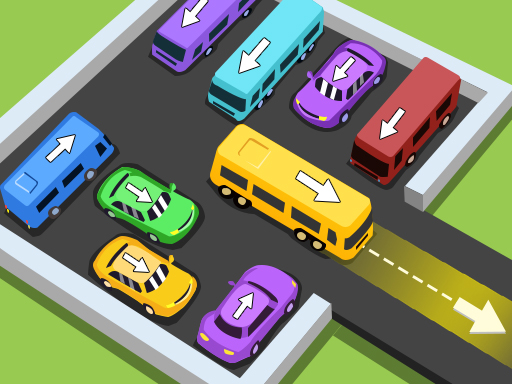
This delightful puzzle game drops you into a bright, colorful parking lot where every vehicle wants to leave—but no one can move without your help. There’s no honking, no stress-filled countdown, just clever puzzles that gently challenge your strategy thinking and reflexes.
It’s the kind of game that makes you smile, furrow your brow, and then smile again when the solution finally clicks.
Let’s take a relaxed drive through everything this game has to offer—how it works, how to play it well, and how to become the calm hero of every traffic jam.
The Core Idea Behind Traffic Jam: Hop On
At its heart, Traffic Jam: Hop On is a logic-based parking puzzle game. Each level presents a jam-packed parking lot filled with vehicles of different shapes, sizes, and directions.
Your goal is simple and satisfying:
Help all vehicles escape the traffic jam and exit the parking lot smoothly.
But as any driver knows, simple goals can hide tricky problems.
Each move matters. One wrong slide, and you might block the very car you need to free next.
How to Play: Clean Controls, Clear Intent
Before strategy, let’s get comfortable with the controls.
Controls
-
Mouse click or tap to play
-
Select a vehicle
-
Move it in its allowed direction
-
Watch the puzzle shift and open up
The controls are intuitive, responsive, and forgiving—perfect for both quick sessions and thoughtful play.
Understanding Vehicle Movement
Not every car moves the same way.
Vehicles in Traffic Jam: Hop On:
-
Can only move forward or backward
-
Are restricted by their orientation
-
Cannot pass through other vehicles
This means every car is both a problem and a potential solution.
Sometimes the car blocking the exit isn’t the real issue—it’s the one blocking that car.
The Parking Lot as a Puzzle Board
Think of the parking lot not as chaos, but as a story waiting to be read.
Each level is carefully designed:
-
Tight spaces create tension
-
Open lanes hint at solutions
-
Vehicle placement teaches foresight
The board always tells you what to do—you just need to listen.
Beginner Strategy: Look Before You Move
If you’re new to Traffic Jam: Hop On, the most important habit to build is this:
Pause before your first move.
Step-by-Step Beginner Approach
-
Identify the exit path
Which vehicle needs to leave first? -
Trace the blockage backward
What’s stopping that vehicle? -
Test small movements
Short moves reveal new possibilities. -
Undo mentally, not emotionally
Mistakes are information, not failure.
This game rewards curiosity more than speed.
Strategy Table: Beginner-Friendly Planning
| Situation | Smart Action | Why It Helps |
|---|---|---|
| Exit blocked | Find the blocker | Clarifies goal |
| Tight space | Move smallest car | Creates flexibility |
| Multiple options | Test one gently | Reveals layout |
| Confusion | Reset view | Restores clarity |
The Emotional Flow of a Traffic Puzzle
Every level follows a quiet emotional arc.
-
Curiosity: “Okay… what’s stuck?”
-
Mild frustration: “Why won’t this move?”
-
Insight: “Ah! If I move this first…”
-
Relief: Vehicles glide out smoothly.
There’s something deeply satisfying about turning chaos into order—especially without pressure.
Intermediate Strategy: Think in Chains, Not Moves
Once you’ve solved a few levels, you’ll notice something important:
Solutions aren’t single actions. They’re chains of movements.
Chain Thinking Explained
Instead of asking:
-
“What can I move now?”
Ask:
-
“What needs to move eventually?”
Work backward from the final exit.
This transforms the puzzle from trial-and-error into thoughtful planning.
Strategy Table: Intermediate Chain Planning
| Technique | How to Use It | Common Mistake |
|---|---|---|
| Exit-first thinking | Start from goal | Random moving |
| Space creation | Clear lanes early | Ignoring space |
| Temporary moves | Shift cars briefly | Forgetting to undo |
| Path visualization | Imagine exit flow | Tunnel vision |
Colorful Design, Clear Thinking
The bright visuals aren’t just pretty—they’re helpful.
Colors and shapes:
-
Differentiate vehicles easily
-
Reduce visual confusion
-
Make patterns easier to spot
This allows your brain to focus on logic rather than decoding the board.
Advanced Strategy: Controlled Trial and Recovery
Even expert players don’t solve every level instantly—and that’s okay.
Smart Trial Moves
Advanced players:
-
Test moves with a purpose
-
Observe what opens up
-
Reverse course when needed
There’s no penalty for exploration. Use it.
Strategy Table: Advanced Puzzle Mastery
| Skill | Why It Matters | How to Improve |
|---|---|---|
| Space awareness | Prevents deadlocks | Watch empty tiles |
| Minimal moves | Cleaner solutions | Plan ahead |
| Recovery thinking | Fixes mistakes | Stay calm |
| Pattern memory | Speeds solving | Learn layouts |
Vehicles as Characters (Yes, Really)
After a while, each vehicle starts to feel… familiar.
That long truck? Always stubborn.
The tiny car? Sneaky but helpful.
The central vehicle? Always important.
This subtle personality makes solving puzzles more engaging and memorable.
Strategies for Children: Learning Through Play
Traffic Jam: Hop On is excellent for kids.
Skills Children Build Naturally
-
Logical reasoning
-
Spatial awareness
-
Patience
-
Planning ahead
Helpful tip: Ask kids to explain their plan.
“Which car needs to move first?”
“What happens if this one goes back?”
It strengthens thinking without pressure.
Tips for Parents Playing Alongside Kids
Instead of giving answers:
-
Ask guiding questions
-
Let kids experiment
-
Praise creative attempts
The joy comes from discovery.
Common Mistakes (And Friendly Fixes)
Everyone makes these—and learns from them.
Frequent Mistakes
-
Moving cars randomly
-
Ignoring the exit goal
-
Blocking newly opened paths
-
Getting stuck on one idea
Gentle Fixes
Step back. Reset your thinking. Try a new chain.
Strategy Table: Mistakes and Better Thinking
| Mistake | Why It Happens | Better Approach |
|---|---|---|
| Random moves | Impatience | Goal-first plan |
| Blocking lanes | Tunnel vision | Watch empty space |
| Repeating loops | Mental fatigue | Try new order |
| Frustration | Overfocus | Take a pause |
Reflexes Matter—But Only a Little
Yes, quick taps help when experimenting, but this is not a reflex-heavy game.
What matters more:
-
Calm observation
-
Thoughtful sequencing
-
Confidence in correction
Speed grows naturally once understanding settles in.
Why the Game Feels Relaxing Despite the Challenge
There’s no timer.
No harsh penalties.
No loud failures.
You control the pace. The puzzle waits for you.
That freedom turns problem-solving into relaxation.
Long-Term Enjoyment: Getting Better Without Stress
Players improve by:
-
Recognizing patterns
-
Visualizing exits faster
-
Using fewer moves naturally
It feels like growth—not grind.
A Small Personal Challenge (For Extra Fun)
Try these self-set goals:
-
Solve a level with fewer moves
-
Identify the exit chain before moving
-
Clear a puzzle without backtracking
Little challenges keep the experience fresh.
Final Thoughts: Turning Traffic Into Tranquility
Traffic Jam: Hop On transforms a universally annoying situation into a delightful puzzle experience. It teaches patience, rewards planning, and offers the quiet joy of watching order emerge from chaos.
No horns. No stress. Just smooth exits and satisfied smiles.
So take a breath. Tap a car. And guide everyone home—one thoughtful move at a time.
Share Your Puzzle Wins 🚗🧠
Solved a tricky level in Traffic Jam: Hop On? Share your clever escapes and favorite puzzles with friends!
Suggested Hashtags:
#TrafficJamHopOn
#ParkingPuzzle
#BrainTeaserGame
#PuzzleStrategy
#RelaxingGames
#SmartPlay
Clear the jam—and enjoy the ride.
About the Author