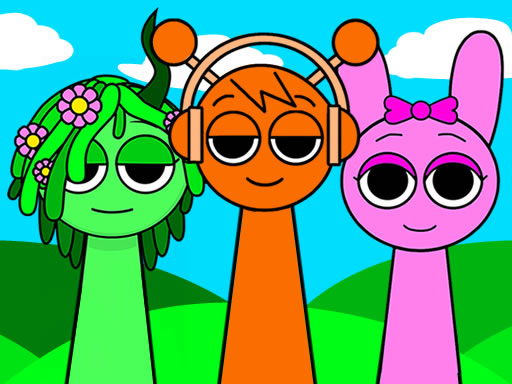
Sprunki Incredibox: A Musical Playground Where Silhouettes Learn to Sing
There’s a special kind of magic that happens when music meets curiosity. It’s the kind that makes children lean closer to the screen, parents pause with a smile, and adults quietly think, “Okay… this is actually brilliant.” That’s exactly the feeling Sprunki Incredibox gives you.
Picture this: nine quirky, black-and-white silhouettes standing patiently, almost shyly, as if whispering, “So… what do you want us to become?” Below them sits a panel of colorful icons, each one humming with possibility. A click, a drag, a gentle tap—and suddenly, a singer is born.
Welcome to Sprunki Incredibox, an online music creation game where funny creatures form their own band, and you’re the friendly conductor guiding them from silence to harmony.
This article is a long, cozy conversation about everything this game offers—how it works, how to play it well, and how to turn it into a joyful learning experience. We’ll talk strategy (lots of it), laugh at small surprises, and share practical wisdom you can actually use.
So grab a cup of something warm, and let’s build a band.
What Exactly Is Sprunki Incredibox?
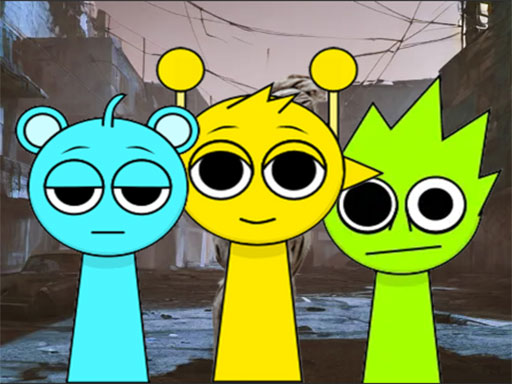
Sprunki Incredibox is a creative music game where players assemble a musical group by assigning unique sounds and visual styles to nine Sprunki characters. Each character begins as a silhouette—blank, neutral, waiting. Your job is to give them identity.
You do this by dragging icons from the bottom panel onto the characters. Each icon represents a musical role, sound effect, rhythm, or vocal style. When placed, the character springs to life, visually and musically.
There’s no score ticking down. No loud “Game Over.” No pressure. The joy comes from experimenting, listening, adjusting, and smiling when everything clicks.
A child once said, “It feels like dressing music up in costumes.” Honestly? That’s not far off.
Core Gameplay Mechanics Explained Simply
Let’s break this down in a way that feels friendly, not textbook-ish.
At its heart, Sprunki Incredibox is about layering sounds. Each Sprunki contributes one musical element. Together, they form a looping composition that evolves as you add or change characters.
The Playing Field
-
Center screen: Nine Sprunki silhouettes
-
Bottom panel: Icons representing sounds and styles
-
Interaction: Drag and drop icons onto characters
Each icon can only be used in certain ways, encouraging thoughtful choices rather than random clicking.
Controls and Interaction
-
Mouse click + drag on desktop
-
Tap and drag on tablets or phones
That’s it. No complicated button combos. No memorization stress. Just intuitive movement.
The Main Objective
There’s no single “win” condition. Instead, your goal is to:
-
Create a balanced, enjoyable musical loop
-
Explore sound combinations
-
Customize each Sprunki’s visual identity
-
Enjoy the process of discovery
And yes, that is a valid objective. Sometimes the best games don’t rush you toward a finish line.
Meeting the Sprunki: Characters With Personality
At first glance, the Sprunki look like simple silhouettes. But once you start assigning sounds, they quickly develop personalities.
One becomes the reliable beat-keeper. Another feels like the dramatic vocalist who steals the spotlight. There’s always one that makes you laugh unexpectedly—usually because you didn’t expect that sound.
Here’s the charming truth: Sprunki Incredibox doesn’t tell you who these characters are. It lets you decide.
That sense of ownership is powerful, especially for younger players.
Step-by-Step: How to Start Your First Musical Group
Let’s walk through a beginner-friendly approach that works for kids, parents, and anyone who likes structure before chaos.
Step 1: Start With Rhythm
Every good song needs a heartbeat.
Choose an icon that represents a rhythm or beat and drag it onto one Sprunki. Listen. Let it loop for a moment.
Mini-dialogue moment:
“Okay, that’s catchy.”
“Wait… what if we add something softer?”
Exactly. Curiosity activated.
Step 2: Add a Bass or Low Sound
Once rhythm is established, add a deeper sound. This grounds the music and prevents it from feeling floaty.
Now you have:
-
One rhythmic layer
-
One supporting layer
Already, it feels like a song.
Step 3: Introduce Melody or Vocals
This is where Sprunki Incredibox shines. Vocal-style icons bring emotion and character. Try one. Then another—but not too many at once.
Listen carefully. If it feels crowded, remove one. The game encourages listening more than rushing.
Step 4: Experiment With Visual Identity
Each icon also changes how the character looks. Suddenly, your band doesn’t just sound unique—it looks like it belongs together.
This is where kids often pause and say, “No, that one doesn’t match the others.” That’s creative judgment forming in real time.
Strategy Table: Beginner-Friendly Musical Building
| Step | Focus Area | Why It Matters | Pro Tip |
|---|---|---|---|
| 1 | Rhythm | Sets the foundation | Keep it simple first |
| 2 | Bass/Support | Adds depth | Avoid overpowering |
| 3 | Melody/Vocals | Adds emotion | Less is often more |
| 4 | Visual Style | Builds identity | Match sound to look |
Smart Strategies for Kids (Ages 6–12)
Children approach Sprunki Incredibox with pure curiosity. Strategies for them should guide without limiting imagination.
Strategy 1: One Change at a Time
Encourage kids to swap only one icon at a time. This helps them hear cause and effect.
Instead of:
“Let’s change everything!”
Try:
“What happens if we change just this one?”
It builds listening skills naturally.
Strategy 2: Name the Sounds
Ask questions like:
-
“Is this sound happy or serious?”
-
“Does this one feel like morning or night?”
You’ll be amazed how quickly kids begin describing music emotionally.
Strategy 3: Let Them Lead
Resist the urge to “fix” their song. If it sounds wild, that’s okay. Exploration comes before refinement.
Strategies for Parents Playing Along
Parents often sit down “just to watch”… and then find themselves deeply invested.
Here’s how to turn Sprunki Incredibox into quality time.
Strategy 1: Co-Create Roles
Say things like:
“You handle the beats. I’ll try the vocals.”
This creates teamwork without competition.
Strategy 2: Talk About Patterns
Without sounding like a lesson, point out patterns:
“Notice how that sound repeats every few seconds?”
You’re gently introducing structure awareness.
Strategy 3: Celebrate Small Wins
When a loop sounds good, pause and enjoy it. Pride matters—even in digital music.
Strategy Table: Family Play Styles
| Player | Best Approach | Shared Benefit |
|---|---|---|
| Child | Exploration | Creativity growth |
| Parent | Gentle guidance | Bonding time |
| Together | Co-creation | Shared achievement |
Advanced Strategies for Curious Players
Once you’re comfortable, Sprunki Incredibox becomes a playground for deeper strategy.
Strategy 1: Balance the Frequency Spectrum
Think of sounds as living in different “spaces”:
-
Low (bass)
-
Mid (vocals)
-
High (effects)
Avoid stacking too many in one space. Balance creates clarity.
Strategy 2: Use Silence Intentionally
Sometimes removing a character makes the whole song better. Silence can be strategic.
Anecdote moment:
I once spent ten minutes adding sounds, only to realize the best version was three characters lighter. I laughed out loud. The Sprunki didn’t judge.
Strategy 3: Build in Layers, Not All at Once
Add sounds gradually and listen between each change. This mirrors how real musicians compose.
Strategy Table: Advanced Play Techniques
| Technique | What It Does | When to Use |
|---|---|---|
| Layering | Builds complexity | After basics |
| Sound Spacing | Improves clarity | Busy mixes |
| Subtraction | Enhances focus | When cluttered |
Maximizing Fun Without Overthinking
The secret joy of Sprunki Incredibox is that it never punishes mistakes. There’s no wrong combination—only different moods.
If a sound makes you laugh, keep it.
If something feels off, change it.
If you’re proud, sit back and listen.
That’s the loop: play, listen, feel, adjust.
Emotional Moments You Didn’t Expect
There’s something oddly nostalgic about Sprunki Incredibox. Maybe it’s the looping rhythms that feel like old mixtapes. Maybe it’s watching a child beam because they made that.
One parent shared:
“My kid called me over just to listen. Not to help. Just to listen.”
That’s a quiet win.
Why Sprunki Incredibox Works as a Learning Game
Without ever announcing itself as educational, the game teaches:
-
Pattern recognition
-
Creative decision-making
-
Emotional expression through sound
-
Patience and listening
And it does it with humor, color, and zero pressure.
Common Mistakes and How to Avoid Them
Even in a relaxed game, a few habits can limit enjoyment.
Mistake 1: Filling All Slots Immediately
Solution: Build slowly. Let the music breathe.
Mistake 2: Ignoring Visual Harmony
Solution: Match looks to sounds—it helps memory and identity.
Mistake 3: Not Listening Long Enough
Solution: Let loops play. Give your ears time.
Long-Tail Search-Friendly Tips You Can Actually Use
If you’re searching for:
-
how to play Sprunki Incredibox for beginners
-
Sprunki Incredibox music creation tips
-
creative music games for kids and parents
Here’s the simplest advice: treat it like a musical sandbox, not a puzzle to solve.
Sharing Your Sprunki Creations With the World
Music wants to be heard—even playful, looped music made by funny creatures.
Encourage sharing by:
-
Recording short clips
-
Talking about the process, not perfection
-
Letting kids explain their choices
Pride grows when creativity is seen.
Social Media Sharing Corner 🎵
Ready to share your Sprunki Incredibox moments? Here are some fun ways to spread the joy:
-
Post a short video of your favorite loop
-
Share a screenshot of your band lineup
-
Ask friends which Sprunki they like best
Suggested Hashtags:
#SprunkiIncredibox
#MusicGameFun
#CreativeKidsGames
#FamilyGaming
#PlayWithSound
#DigitalMusicPlayground
Sprunki Incredibox isn’t just a game—it’s a conversation between sound and imagination. And every time you drag an icon onto a waiting silhouette, you’re answering a simple, joyful question:
What if we tried this?
And honestly? That’s how all good music begins. 🎶
About the Author