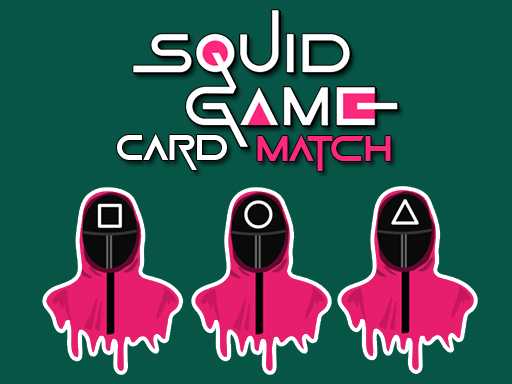
Entering the Arena of Memory and Nerves
The first time you flip a card in Squid Game Memory Card Match, there’s a tiny pause in your chest.
Will it match?
Will you remember where the other one was?
Did the clock just move faster?
That feeling—that gentle pressure mixed with curiosity—is exactly what makes this game special.
Inspired by the iconic symbols and characters of Squid Game, this memory card experience doesn’t rely on action or speed alone. Instead, it quietly challenges your focus, recall, and emotional control. Every flip is a decision. Every match is a small victory. Every mistake is a lesson delivered with a knowing smile.
Let’s sit together with this game for a while and explore how it works, why it feels so intense, and—most importantly—how to play it well.
Understanding the Core Idea of Squid Game Memory Card Match
At its heart, this game is built on a classic and beloved concept:
Cards are laid face down
Each symbol or character has a matching pair
You flip two cards at a time
Match them to remove them
Clear the board before time runs out
What elevates this version is the Squid Game theme—familiar shapes, masks, and symbols that instantly grab attention and add emotional weight to every reveal.
The pressure doesn’t come from danger.
It comes from the ticking clock and your own memory.
Controls That Stay Out of Your Way
The game is refreshingly simple to control, which is exactly what a memory game should be.
Mouse click on desktop
Tap on touchscreen devices
No extra buttons. No complicated gestures. Just clean interaction that lets your mind do the heavy lifting.
This simplicity makes the game welcoming for younger players while still challenging for older ones.
The True Objective: More Than Just Matching Cards
Yes, the official goal is to match all pairs before time runs out.
But the deeper objective is learning how to:
Stay calm under pressure
Observe carefully
Remember patterns
Recover quickly from mistakes
It’s a quiet mental workout disguised as a playful challenge.
Why the Squid Game Theme Works So Well Here
There’s something about recognizable symbols that sticks in the brain.
Circles, triangles, squares, guards, players—these visuals are bold and distinct, which helps memory but also tests it. Because while the symbols are clear, the positions change, and that’s where focus really matters.
The theme adds tension without overwhelming the experience, keeping it exciting rather than stressful.
Beginner Strategy: Laying the Foundation for Success
If you’re new to the game, the worst thing you can do is rush.
Here’s a calmer, smarter way to begin.
Step 1: Use the First Few Flips as Research
Don’t worry about matching immediately.
Instead:
Flip cards in different areas
Take mental notes of symbols and locations
Let your brain build a map
Think of the first round as exploration, not competition.
Step 2: Match Only When You’re Sure
Guessing feels tempting under time pressure, but it often wastes more time than it saves.
Confidence beats speed—especially early on.
Strategy Table: Beginner Memory Foundations
| Focus Area | What to Do | Why It Helps |
|---|---|---|
| Early flips | Spread them out | Builds board awareness |
| Matching | Only when confident | Saves time |
| Pace | Stay calm | Reduces mistakes |
This approach turns chaos into structure very quickly.
The Clock: Friend or Foe?
The timer adds excitement, but it can also rattle your thinking if you let it.
Here’s the truth:
Panicking makes memory worse.
When the clock ticks, remind yourself:
“I see better when I’m calm.”
Even a single deep breath before flipping a card can steady your focus.
Mid-Game Strategy: Creating Mental Anchors
Once several cards are revealed, it’s time to organize memory, not just store it.
How to Create Mental Anchors
Group symbols in your mind by location
Associate a symbol with a corner or row
Create tiny stories (“The square guard lives top-left”)
It may sound playful, but storytelling is one of the strongest memory tools humans have.
Strategy Table: Memory Anchoring Techniques
| Technique | Example | Best Use |
|---|---|---|
| Location tagging | “Mask in bottom-right” | Larger grids |
| Symbol grouping | All shapes in one row | Visual clarity |
| Mini-stories | Character + position | Long sessions |
The board becomes familiar instead of overwhelming.
Common Symbols and How to Remember Them Faster
Some cards are easier to mix up than others.
Helpful Recognition Tips
Focus on shape edges, not color alone
Look for tiny details like orientation or expression
Compare symbols side-by-side mentally
Your brain remembers differences better than similarities—use that.
Strategy Table: Fast Symbol Recognition
| Symbol Type | What to Focus On |
|---|---|
| Shapes | Corners and angles |
| Characters | Mask details |
| Icons | Orientation and spacing |
Once you train your eye, recognition speeds up naturally.
Emotional Control: The Hidden Skill
Here’s something seasoned players learn quickly:
Mistakes happen.
You’ll flip two cards that don’t match. The key is what happens next.
Don’t sigh
Don’t rush
Don’t replay the mistake emotionally
Instead, store the information and move on.
That calm recovery often decides the game.
Playing With Friends: Competition Without Chaos
When playing with friends, the pressure shifts.
Suddenly, it’s not just about memory—it’s about pride, laughter, and friendly rivalry.
Smart Competitive Tips
Focus on accuracy, not showing off
Let others rush; you stay steady
Learn from their mistakes too
The best players look calm even when they’re winning.
Advanced Strategy: Controlled Flipping Patterns
Advanced players don’t flip randomly.
They use patterns.
Effective Flipping Patterns
Left to right
Top row first
One column at a time
Consistency helps your brain predict and recall positions faster.
Strategy Table: Advanced Flipping Control
| Pattern | Best Scenario | Benefit |
|---|---|---|
| Row-based | Wide boards | Clean mental map |
| Column-based | Tall grids | Reduces confusion |
| Quadrant focus | Hard levels | Limits memory load |
Structure brings clarity under pressure.
When Time Is Running Low: What to Do
This is the moment everyone recognizes.
The board is half-cleared.
The clock is low.
Your heart speeds up.
Here’s the winning move: slow down just slightly.
Accuracy at this stage saves more time than frantic guessing ever could.
Strategy Table: Endgame Decision Making
| Situation | Best Choice | Why |
|---|---|---|
| Unsure match | Reveal new card | Gathers info |
| One pair left | Double-check memory | Avoid reset |
| Low time | Confident flips only | Maximizes efficiency |
Endgames are about trust—trust in what you’ve already seen.
Playing With Children: Turning Pressure Into Play
This game is wonderful for shared play with kids.
Gentle Guidance Tips
Encourage describing cards out loud
Praise remembering, not just winning
Keep sessions short and positive
It builds focus, patience, and confidence in a joyful way.
Why This Game Improves Memory Naturally
Without feeling like practice, the game trains:
Visual recall
Spatial awareness
Emotional regulation
Decision-making under pressure
And because it’s fun, players want to return—strengthening those skills over time.
Common Mistakes (And Friendly Fixes)
| Mistake | Why It Happens | Easy Fix |
|---|---|---|
| Random flipping | Anxiety | Use a pattern |
| Guessing pairs | Time pressure | Gather info first |
| Losing focus | Long sessions | Take short breaks |
Mistakes are part of learning, not signs of failure.
Why Squid Game Memory Card Match Stays Engaging
It balances tension and fun beautifully.
The theme adds excitement
The mechanics stay simple
The challenge scales naturally
You feel tested—but never overwhelmed.
That balance is rare, and it’s why players keep coming back.
Search-Friendly Insights Players Often Want
Players often search for:
“Squid Game memory card match tips”
“How to win memory card games fast”
“Best strategies for card matching games”
And the answer always circles back to calm focus, structure, and practice.
Final Thoughts: Keeping Your Cool, One Flip at a Time
Squid Game Memory Card Match isn’t about speed alone.
It’s about awareness.
It’s about patience.
It’s about trusting your memory—even when the clock ticks loudly.
Every flip is a chance to learn something new about the board—and about yourself.
And when you clear that final pair just in time?
That quiet victory feels incredibly satisfying.
Share the Challenge on Social Media
Beat the clock? Matched the board flawlessly? Invite others to test their focus.
Suggested Hashtags:
#SquidGameMemory
#MemoryCardMatch
#BrainChallenge
#FocusGame
#PuzzleFun
#TapToMatch
#MindGames
Because every smart flip deserves a little recognition 🟥🟢🧠