Game Overview
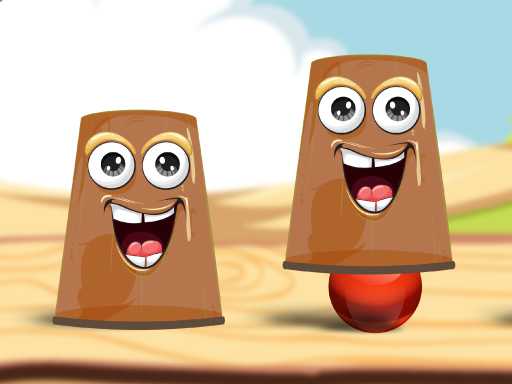
Find the Ball is a deceptively simple game that quickly reveals how tricky your own eyes and memory can be. At first, it feels almost too easy: three animated cups, one red ball, and a quick shuffle. You watch, you follow, you click. Done, right? And yet—somewhere between the smiling faces on the cups and their increasingly clever movements—you lose track, guess wrong, and laugh at yourself.
That reaction is exactly why Find the Ball works so well.
The game is built around a classic shell-style puzzle, modernized with cheerful graphics, expressive cup animations, and smooth motion. Your task is to carefully observe which cup hides the red ball, follow it as the cups shuffle rapidly, and then select the correct cup once the movement stops. With every round, the pace can feel faster, the animations more distracting, and the challenge more satisfying.
Before going deeper, let’s clear up an important point.
Is there a Wikipedia link for Find the Ball?
No. At this time, Find the Ball does not have a dedicated Wikipedia page. While cup-and-ball style games are well known historically, this specific digital game is not currently documented on Wikipedia.
What Type of Game Is Find the Ball?
Find the Ball is best described as an observation and memory puzzle game. It focuses on:
Visual tracking
Short-term memory
Concentration under motion
Quick decision-making
There are no complex rules to learn. The challenge comes entirely from how well you can stay focused as the game tries—politely but persistently—to distract you.
Controls and How to Play
One of the reasons Find the Ball appeals to players of all ages is its extremely intuitive control scheme.
Desktop Controls
Click the Play button to begin
Watch the cups shuffle carefully
Use your mouse to click the cup where you believe the ball is hidden
Mobile Controls
Tap the Play button to start
Keep your eyes on the ball as the cups move
Tap the cup you think hides the ball
No menus to navigate, no buttons to memorize—just watch, remember, and choose.
Core Objective
Every round of Find the Ball follows the same clear objective:
Observe where the red ball starts
Track it as the cups shuffle
Identify the correct cup when the shuffle stops
Success depends on attention, not speed. Guessing quickly rarely helps—accurate observation always wins.
Why Find the Ball Is So Addictive
There’s a particular emotional loop at work here:
Confidence at the start
Doubt halfway through the shuffle
Suspense when the cups stop
Satisfaction or surprise at the result
Win or lose, you immediately want to try again. The rounds are short, feedback is instant, and improvement feels personal.
Visual Design and Animation
The animated cups aren’t just decorative. Their expressive faces and lively motion are part of the challenge.
Facial expressions subtly distract you
Smooth animations make tracking harder
Motion feels playful rather than frustrating
This design choice keeps the game lighthearted even when you guess wrong.
Complete Gameplay Strategies
Although Find the Ball looks simple, strong strategies can dramatically improve your success rate. Below is a full breakdown of how to sharpen your focus and make better guesses consistently.
Focus Before the Shuffle Begins
The most important moment in the game happens before anything moves.
Pre-Shuffle Strategy
Identify the starting cup clearly
Center your attention on that position
Ignore animations unrelated to the ball
Strategy Table: Pre-Shuffle Focus
| Tip | Action | Reasoning |
|---|---|---|
| Lock on early | Memorize start position | Prevents confusion |
| Reduce distractions | Ignore cup faces | Improves tracking |
| Stay centered | Watch middle area | Easier visual control |
Tracking During the Shuffle
This is where most mistakes happen. The shuffle is designed to test your patience.
Tracking Techniques
Follow the cup, not the motion blur
Move your eyes smoothly, not sharply
Avoid switching focus mid-shuffle
Strategy Table: Shuffle Tracking
| Tip | Action | Reasoning |
|---|---|---|
| Smooth eye movement | Follow gently | Reduces loss of focus |
| Single-target focus | Track one cup only | Avoids confusion |
| Ignore speed | Trust observation | Prevents panic |
Managing Speed and Complexity
As rounds continue, the shuffle may feel faster or more complex.
Staying Calm Under Pressure
Don’t rush your decision
Remember the final position clearly
Take a brief pause before clicking
Strategy Table: Speed Management
| Tip | Action | Reasoning |
|---|---|---|
| Stay calm | Breathe and pause | Improves accuracy |
| Delay click | Confirm position | Reduces misclicks |
| Trust memory | Don’t second-guess | Prevents errors |
Pattern Recognition and Anticipation
Even when the shuffle looks random, patterns often appear.
What to Watch For
Repeated swap movements
Symmetrical shuffles
Familiar rotation paths
Strategy Table: Pattern Awareness
| Tip | Action | Reasoning |
|---|---|---|
| Watch repetitions | Identify cycles | Predicts outcomes |
| Learn movement styles | Observe shuffle habits | Improves anticipation |
| Review mistakes | Recall lost rounds | Sharpens awareness |
Avoiding Common Mistakes
Knowing what not to do is just as valuable.
Frequent Errors
Clicking based on instinct
Letting animations distract focus
Losing track halfway through
Strategy Table: Mistake Prevention
| Tip | Action | Reasoning |
|---|---|---|
| Avoid guessing | Use observation | Increases success |
| Ignore faces | Focus on movement | Reduces distraction |
| Stay engaged | Track entire shuffle | Prevents loss of focus |
Improving Memory Over Time
Find the Ball quietly trains short-term memory.
Memory-Building Tips
Play in short, focused sessions
Mentally label positions (left, middle, right)
Reflect briefly after each round
Strategy Table: Memory Training
| Tip | Action | Reasoning |
|---|---|---|
| Short sessions | Avoid fatigue | Keeps focus sharp |
| Position labeling | Name locations | Aids recall |
| Post-round review | Think about outcome | Strengthens memory |
Why Find the Ball Works for All Ages
The game doesn’t rely on fast reflexes or complicated logic. Instead, it rewards careful observation and patience.
It’s ideal for:
Kids developing focus
Adults enjoying light mental challenges
Casual players seeking quick fun
Anyone wanting to test attention skills
The difficulty comes from perception, not pressure.
Long-Tail Keywords Naturally Integrated
Players often search for:
“Find the Ball observation game”
“cup and ball memory puzzle”
“Find the Ball game strategies”
“how to track the ball under cups”
“visual memory puzzle game”
These reflect exactly how players approach improving their performance.
Playing for Fun, Not Frustration
The best mindset for Find the Ball is playful curiosity.
Treat wrong guesses as learning moments
Laugh at clever shuffles
Focus on improvement, not perfection
The game shines when you relax and stay observant.
Final Thoughts
Find the Ball proves that a simple idea, executed well, can be endlessly engaging. By combining animated charm, intuitive controls, and a classic observation challenge, it creates an experience that feels lighthearted yet mentally rewarding.
Whether you’re sharpening your focus, testing your memory, or just enjoying a few quick rounds, Find the Ball offers a satisfying balance of challenge and fun. Watch closely, stay calm, and trust your eyes—because the ball is only ever lost when you stop paying attention.