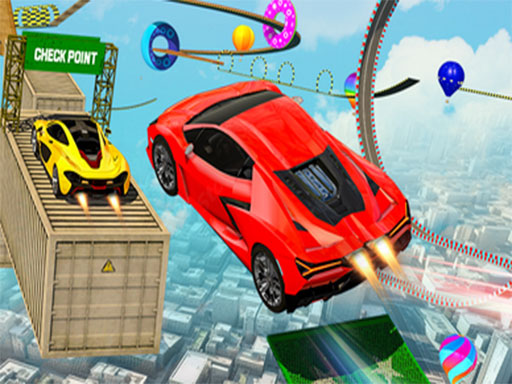
Game Overview
GT Racing brings the electrifying spirit of classic 80s arcade driving back to life with a modern sense of polish, speed, and control. This vibrant racer captures the thrill of high-velocity competition across 21 dynamic circuits, each hiding its own surprises, shortcuts, and rhythm. From the moment the engine growls to life, GT Racing invites players into a world where reflexes matter, where timing the turbo boost can change the outcome of a race, and where smooth, intuitive handling makes mastering every track feel deeply satisfying.
Although inspired by vintage arcade legends, the game adds a refreshing sense of depth through its circuit variety, visually rich environments, and sharply tuned vehicle responsiveness. The races unfold across sun-soaked highways, neon-lit city roads, and retro-styled vistas that evoke the unmistakable charm of the golden era of arcade gaming. Yet beneath that nostalgia lies a set of mechanics that reward players who blend fast reactions with thoughtful planning.
Whether you play with a mouse or simple tap controls, GT Racing keeps the focus exactly where it should be—on speed, precision, and the thrill of pushing your car to its limits.
For players seeking additional insights into racing mechanics and arcade gameplay structure, a helpful resource is available at Webedia’s gameplay guide: https://www.webedia.com/gameplay-guide.
Complete Gameplay Strategies
Becoming truly skilled in GT Racing requires more than flooring the accelerator. While the game is accessible and fast-paced, each circuit demands situational awareness, strategic turbo usage, and a steady feel for car handling. The following comprehensive strategies break down the essential ways to sharpen your racing performance and consistently challenge the leaderboards.
Strategy 1: Mastering Car Control
Smooth handling is the foundation of success in GT Racing. The game’s controls are intentionally simple—click or tap to steer—but those small movements have enormous consequences at high speed. Mastering control early allows you to stay centered on the track, avoid hazards, and maintain momentum through tight corners.
Key Concepts
-
Control subtlety matters more than rapid inputs.
-
Early steering adjustments stabilize the car before corners.
-
Maintaining line consistency reduces the need for mid-turn corrections.
Practical Tips
-
Anticipate turns by shifting position early.
-
Keep the car near the center lane when unsure of upcoming hazards.
-
Use short micro-adjustments rather than sweeping gestures.
-
Avoid overcorrecting after minor drifts.
Table – Car Control Mastery
| Tip | Action | Reasoning |
|---|---|---|
| Make early adjustments | Begin turning before the corner arrives | Smooth transitions keep speed stable |
| Stay centered when possible | Maintain middle lane positioning | Maximizes reaction time to hazards |
| Use gentle steering | Apply light, controlled movements | Reduces drift and maintains optimal speed |
| Recover gradually | Correct drift with small taps | Prevents sudden loss of control |
Strategy 2: Turbo Boost Optimization
Turbo boosts are powerful tools in GT Racing, but using them carelessly wastes their potential. A well-timed turbo can launch you ahead of opponents, help recover from a small mistake, or capitalize on long straightaways.
Key Concepts
-
Turbo boosts are most effective on straight sections.
-
Using a boost on curves decreases control.
-
Saving boosts for critical race moments enhances consistency.
Practical Tips
-
Use turbo only when you have a clear view of the road ahead.
-
Activate boosts strategically near the end of long straights.
-
Never turbo into a turn—you’ll lose control and speed.
-
Keep at least one boost reserved for last-lap pressure moments.
Table – Turbo Strategy
| Tip | Action | Reasoning |
|---|---|---|
| Boost on long straights | Wait for clear, extended track sections | Maximizes speed gain and minimizes risk |
| Avoid boosting into corners | Disable turbo before turning | Preserves control and prevents crashes |
| Save one boost for the end | Keep turbo for final sprint | Helps secure last-second overtakes |
| Combine boost with ideal racing lines | Activate only when fully stabilized | Ensures optimal acceleration |
Strategy 3: Circuit Awareness and Pattern Reading
Each of the 21 circuits in GT Racing has its own flow—its own combination of turns, open stretches, and visual cues. Learning the layout of each track not only builds confidence but also sharpens your instincts for where to accelerate, conserve speed, or prepare for hazards.
Key Concepts
-
Every circuit has a “signature” rhythm.
-
Visual cues serve as early warning signs.
-
Recognizing repeat patterns allows precise anticipation.
Practical Tips
-
Observe trackside markers to predict upcoming turns.
-
Commit tricky sections to memory after multiple runs.
-
Identify safe zones where catching breath is possible.
-
Track how road curvature changes from lap to lap.
Table – Circuit Mastery
| Tip | Action | Reasoning |
|---|---|---|
| Learn visual cues | Watch roadside signs and color changes | Helps prepare for turns before they occur |
| Memorize complex turns | Practice circuit sections repeatedly | Builds automatic responses |
| Identify recovery zones | Find straightaways for regaining control | Reduces stress during difficult laps |
| Analyze circuit patterns | Note repeating turns or hazards | Enhances anticipation and stability |
Strategy 4: Speed Management and Corner Handling
Speed control is often overlooked by new players who assume constant acceleration leads to victory. Instead, adapting your speed to each turn and understanding when to maintain versus release pressure is crucial to staying competitive.
Key Concepts
-
High speed is useful only when manageable.
-
Corners reward stability, not risk.
-
Recovering from overspeeding costs more than slowing strategically.
Practical Tips
-
Slightly reduce speed before major turns.
-
Avoid drifting wide on exits—this costs acceleration time.
-
Use the inside lane when possible for smoother corner arcs.
-
Stabilize your position quickly after a turn to prepare for the next segment.
Table – Speed and Cornering Strategy
| Tip | Action | Reasoning |
|---|---|---|
| Slow before turning | Reduce speed briefly before curves | Maintains control and prevents skid loss |
| Choose inside lines | Enter corners at tight angles | Minimizes turning distance |
| Transition smoothly | Stabilize early after a turn | Prepares for rapid speed ramp-up |
| Avoid full speed in complex turns | Ease off acceleration temporarily | Reduces crash probability |
Strategy 5: Momentum Preservation
Momentum is the invisible currency of GT Racing. While boosts and acceleration help, maintaining your pace consistently across a circuit is far more valuable.
Key Concepts
-
Crashes and wide turns cost more time than slowdowns.
-
Maintaining flow is more important than aggressive risk.
-
Small gains compound significantly on longer tracks.
Practical Tips
-
Focus on clean driving over flashy maneuvers.
-
Avoid rapid lane changes that interrupt stability.
-
Identify areas where small corrections prevent major errors.
-
Build rhythm through steady lines and timed adjustments.
Table – Momentum Strategy
| Tip | Action | Reasoning |
|---|---|---|
| Prioritize clean runs | Drive carefully rather than recklessly | Minimizes time-losing errors |
| Maintain straight lines | Avoid weaving unnecessarily | Preserves maximum speed |
| Correct early | Fix small misalignments quickly | Prevents larger, speed-killing mistakes |
| Follow circuit rhythm | Match the natural flow of each track | Enhances long-term momentum |
Strategy 6: Visual Awareness and Hazard Reaction
Retro-styled tracks in GT Racing often include environmental elements and visual distractions that can mislead or surprise unwary players. Staying alert to the road while filtering unnecessary details is key to advanced racing performance.
Key Concepts
-
Not all visual elements affect gameplay, but some indicate danger.
-
Split-second reactions become easier with heightened awareness.
-
The eyes should stay ahead of the car, not focused directly on it.
Practical Tips
-
Look toward the horizon line to anticipate approaching turns.
-
Recognize color changes as potential caution points.
-
Filter out environmental decoration that doesn’t affect movement.
-
Keep a wide field of view to track lane options.
Table – Visual Awareness Strategy
| Tip | Action | Reasoning |
|---|---|---|
| Look ahead, not down | Focus on distant track sections | Enhances reaction time |
| Study environment cues | Note color or texture changes | Alerts you to upcoming hazards |
| Avoid visual fixation | Keep awareness broad | Prevents tunnel vision |
| Scan lane options | Monitor multiple paths at once | Allows quick decision-making |
Final Thoughts
GT Racing offers an energizing blend of retro flair, sharp controls, and high-intensity action. Its commitment to 80s arcade authenticity shines through in every track, every curve, and every turbo-powered sprint toward the finish line. Yet beneath that nostalgic charm lies a deep, strategic experience that rewards attentive players who master car handling, memorize circuits, and use speed intelligently.
With 21 circuits to conquer, each brimming with personality and challenge, GT Racing delivers a racing journey that feels both timeless and thrillingly modern. Whether you’re playing casually with a mouse click or tapping through tight corners on mobile, the game invites you to refine your skills, chase perfect runs, and experience the exhilaration of pure arcade racing at its best.
For newcomers and long-time racing fans alike, GT Racing stands as a fast, polished, and endlessly replayable celebration of high-speed mastery.
About the Author