Holiday Hex Sort: A Festive Puzzle Where Calm Thinking Beats the Clock
Some games feel like a cozy holiday market—twinkling lights, cheerful music, and just enough bustle to keep your heart awake. Holiday Hex Sort is exactly that kind of experience. Festive on the surface, quietly demanding underneath, and always nudging you to think just one move ahead.
At first glance, it looks simple: colorful hex tiles, neat stacks, and a board waiting to be cleared. But then the timer appears. New tile types join the party. The stacks grow taller. And suddenly, you’re leaning closer to the screen, smiling, thinking, “Okay… this is trickier than I thought.”
Let’s take a warm, unhurried walk through everything this game has to offer—from how it works to how to master it—so you can enjoy the challenge without ever losing the holiday spirit.
The Core Idea Behind Holiday Hex Sort
At its heart, Holiday Hex Sort is about organization under pressure.
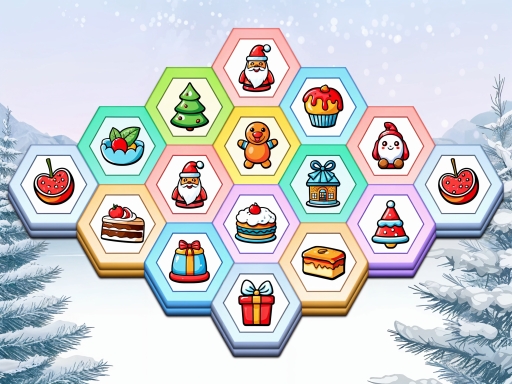
You drag and drop hex tile stacks onto the board. When 10 identical tiles stack together, they’re collected and removed. Your mission is to clear all tiles before time runs out.
Sounds manageable, right?
But as levels progress:
-
More tile types appear
-
Decision-making becomes tighter
-
Space feels smaller
-
Time suddenly matters a lot
The game doesn’t overwhelm you—it gently tests how well you can plan, adapt, and stay calm when the board gets busy.
Controls and Interaction: Smooth and Intuitive
Before we dive into strategy, let’s ground ourselves in how you actually play.
How to Play
-
Use your mouse or touchpad
-
Drag and drop hex tile stacks onto the board
-
Merge stacks of the same tile type
-
Create stacks of exactly 10 to collect them
-
Clear the board before time runs out
There’s something deeply satisfying about dragging a stack into place and watching it snap together perfectly. It’s simple, tactile, and quietly rewarding.
Understanding Hex Tile Stacks: The Building Blocks of Strategy
Each stack is made up of identical tiles. Some are short. Some are tall. Some are… inconveniently sized.
The challenge isn’t just matching tiles—it’s managing stack height.
If you place stacks carelessly:
-
You might overshoot 10
-
You might block future merges
-
You might waste precious seconds fixing mistakes
A good player doesn’t just see tiles. They see potential stacks of 10.
The Goal That Guides Every Move
Everything you do in Holiday Hex Sort should serve one purpose:
Create stacks of 10 identical tiles efficiently before time runs out.
That’s it. No extra points for speed alone. No bonus for fancy placement. Just smart merging.
But getting there requires thoughtful decisions.
Beginner Strategy: Slow Hands, Clear Mind
If you’re just starting out, here’s the best advice you’ll hear all day:
Don’t rush—even though there’s a timer.
Step-by-Step Beginner Approach
-
Scan all available stacks first
Before dragging anything, look at tile types and stack sizes. -
Identify easy tens
If you see stacks that clearly add up to 10, start there. -
Keep similar tiles close
Grouping reduces mental load and saves time later. -
Avoid stacking different tile types together
It rarely helps and often blocks progress.
There’s a funny moment most beginners experience: you panic because the timer ticks… then you realize rushing only makes it worse. Calm wins.
Strategy Table: Beginner-Friendly Stack Management
| Situation | Best Move | Why It Works |
|---|---|---|
| Two stacks add to 10 | Merge immediately | Instant clear |
| Many tile types visible | Pause and scan | Prevents wrong merges |
| Small stacks everywhere | Group by type | Sets future clears |
| Timer pressure | Focus on one goal | Reduces mistakes |
The Timer: Pressure Without Panic
The timer in Holiday Hex Sort is clever. It doesn’t scream at you. It just exists—quiet, steady, and motivating.
The key is learning when to ignore it.
Good players:
-
Ignore the timer while planning
-
Respect it while executing
If you rush every move, you’ll lose. If you ignore time completely, you’ll also lose. Balance is everything.
Intermediate Strategy: Planning Stack Pathways
Once you’re comfortable with the basics, it’s time to think in pathways, not moves.
What Is a Stack Pathway?
It’s the mental plan of how small stacks will eventually become a stack of 10.
For example:
-
A stack of 3 + a stack of 2 = 5
-
That 5 + another 5 = 10
You don’t need to merge everything immediately. Sometimes, it’s smarter to prepare future tens.
Strategy Table: Intermediate Stack Planning
| Technique | How to Use It | Common Mistake |
|---|---|---|
| Partial builds | Create 5s or 6s | Forgetting to finish |
| Tile zoning | Keep types separated | Mixing under pressure |
| Delayed merge | Wait for perfect fit | Waiting too long |
| Board awareness | Track empty spaces | Blocking paths |
More Tile Types, More Decisions
As levels progress, the game introduces more tile types. This is where many players feel overwhelmed.
Here’s the secret: you don’t need to manage everything at once.
Focus on:
-
One or two tile types at a time
-
Clearing them fully before moving on
This reduces clutter and mental fatigue.
A little anecdote: I once tried to juggle every tile type at once. The board filled, time ran out, and I laughed—because the solution was obvious in hindsight. One problem at a time.
Advanced Strategy: Stack Height Discipline
This is where skilled players shine.
Stack Height Awareness
Always ask:
-
How tall is this stack now?
-
What happens if I add this one?
Overshooting 10 is rarely helpful. Precision matters.
Controlled Overbuilding (When It’s Okay)
Sometimes, you have to temporarily exceed ideal sizes to reorganize the board. The trick is knowing when you can recover quickly.
Advanced players:
-
Accept short-term mess for long-term clears
-
Fix problems immediately, not “later”
Strategy Table: Advanced Mastery Techniques
| Skill | Why It Matters | How to Practice |
|---|---|---|
| Height tracking | Prevents wasted merges | Count before dropping |
| Recovery planning | Saves bad boards | Clear one type fast |
| Speed placement | Beats timer | Confident drag motions |
| Calm correction | Avoids spirals | Pause, then act |
Spatial Awareness: The Silent Skill
The board itself is part of the puzzle.
Where you place stacks determines:
-
What can merge next
-
How easily you can move
-
Whether the board feels open or cramped
Try to:
-
Leave open spaces near related tiles
-
Avoid cornering important stacks
-
Think of space as a resource
Strategies for Children: Learning Through Festive Play
Holiday Hex Sort is wonderfully approachable for kids.
Skills Children Build Naturally
-
Counting to 10
-
Pattern recognition
-
Time awareness
-
Emotional control under pressure
Helpful tip for kids: say the numbers out loud.
“This is three… now it’s five… I need five more!”
It turns strategy into a playful math story.
Strategies for Parents Playing Alongside Kids
If you’re guiding a child, try being the “planner.”
Ask:
-
“Which stacks could make 10?”
-
“What happens if we put this here?”
-
“Should we clear this one first?”
Celebrate thoughtful choices—not just wins.
Common Mistakes (And How to Gently Fix Them)
Everyone makes these. Even experienced players.
Frequent Errors
-
Dragging without planning
-
Mixing tile types
-
Ignoring stack height
-
Panicking near the timer’s end
Gentle Fixes
Slow your hands. Speed comes after clarity.
Strategy Table: Mistakes and Better Choices
| Mistake | Why It Happens | Better Approach |
|---|---|---|
| Panic merging | Timer pressure | Plan one stack |
| Tile mixing | Space anxiety | Separate types |
| Overshooting 10 | Inattention | Count first |
| Board clutter | Too many goals | Clear one type |
The Emotional Flow of Holiday Hex Sort
This game has a rhythm:
-
Calm planning
-
Focused action
-
Brief tension
-
Satisfying clears
That moment when a stack hits exactly 10 and disappears? Pure joy. A tiny celebration.
And when you clear the final tile just before time runs out—it feels earned.
Maximizing Fun Without Stress
To keep the game enjoyable:
-
Take breaks between levels
-
Replay earlier stages to refine skills
-
Set personal challenges (fewer moves, cleaner board)
The game isn’t about perfection. It’s about progress.
Long-Term Improvement: How Players Get Better
Players improve not by clicking faster, but by:
-
Seeing patterns quicker
-
Counting instinctively
-
Staying calm under pressure
It’s quiet growth. The best kind.
Final Thoughts: Festive Strategy Done Right
Holiday Hex Sort is proof that time-based games don’t need to be frantic. It blends festive charm with thoughtful strategy, rewarding players who stay calm, plan wisely, and trust their instincts.
You’re not just sorting tiles—you’re organizing chaos, one careful stack at a time.
So take a breath. Drag that stack. Count to ten. You’ve got this.
Share the Holiday Fun 🎄🔷
Cleared a tough level in Holiday Hex Sort? Share your victory and strategies with friends!
Suggested Hashtags:
#HolidayHexSort
#FestivePuzzleGame
#HexTileChallenge
#PuzzleStrategy
#HolidayGaming
#CalmAndClever
Spread the cheer—and the clever merges.
About the Author