Game Overview
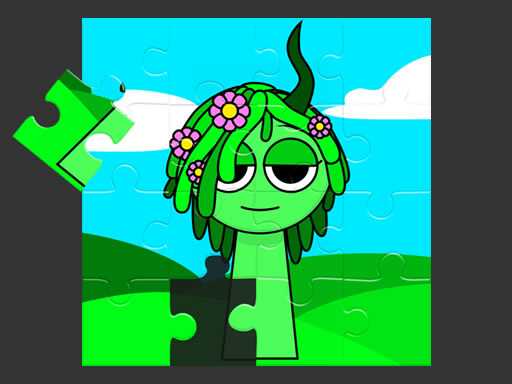
Sprunki Jigsaw is a simple yet surprisingly engaging online puzzle experience that blends the timeless appeal of classic jigsaw-solving with accessible digital design. In Sprunki Jigsaw, players choose from a set of vibrant images and attempt to assemble them in record time, testing both precision and pattern recognition. With four difficulty modes—16, 36, 64, and 100-piece arrangements—the game welcomes absolute beginners while still offering a satisfying challenge for more experienced puzzle enthusiasts.
As a free, browser-based title, Sprunki Jigsaw is easy to pick up and play, whether you’re looking for a brief mental break or a more focused puzzle session. Because it uses familiar mechanics—dragging, dropping, and rotating puzzle pieces—the learning curve is minimal, allowing players to jump straight into the fun.
For those wondering: there is no known Wikipedia page specifically dedicated to Sprunki Jigsaw at the time of writing.
Gameplay Overview
The foundation of Sprunki Jigsaw lies in its selection of fifteen images, each offering a distinct color palette and structure. After choosing an image, players select one of four modes, each defined by the total number of pieces. Smaller formats favor speed and intuition, while larger puzzles demand greater observational skill and spatial awareness.
Gameplay consists of clicking or tapping to manipulate pieces, which can be arranged freely across the playfield. As the board fills in, visual cues—matching edges, continuity in lines, and color clustering—guide the solver toward completion. The objective is simple: complete the puzzle as quickly as possible.
What seems like a light, casual activity can easily evolve into a competitive pursuit, especially for those who enjoy beating personal best times or perfecting their approach through refined strategies.
Complete Gameplay Strategies
Below are comprehensive strategies designed to elevate your performance in Sprunki Jigsaw, whether you are navigating a quick 16-piece puzzle or tackling the full 100-piece challenge.
Strategy 1 – Mastering the Early Game
Understanding how to begin efficiently sets the tone for the entire solving session. Many players waste valuable seconds scrambling for a starting point, but a structured opening gives you an immediate advantage.
Key Techniques for a Strong Start
-
Always begin by identifying edge pieces.
-
Separate corner pieces as early as possible.
-
Group pieces by color or texture before placing them.
-
Avoid committing too early to uncertain placements.
Table: Early Game Efficiency
| Tip | Action | Reasoning |
|---|---|---|
| Prioritize corner pieces | Locate all four corners immediately | Simplifies frame building and provides instant structure |
| Sort by edges | Move all flat-edged pieces to a dedicated area | Creates a boundary for faster central assembly |
| Pre-group by color | Drag pieces into clusters representing dominant hues | Reduces visual noise, speeding up recognition |
| Avoid guesswork | Only place pieces that clearly fit | Prevents time-consuming corrections later |
Strategy 2 – Mid-Puzzle Organization
Once the border is complete, the mid-puzzle phase focuses on building clusters and connecting them into the central image.
Visual Pattern Recognition
Recognizing recurring patterns—from shapes to gradients—helps you connect segments quickly and avoid misplacements.
Mid-Puzzle Tips
-
Use repeating textures (grass, sky, clothing, etc.) as anchors.
-
Expand outward from completed sections.
-
Rotate pieces mentally by observing contours and outlines.
-
Maintain orderly spacing on the board for quick scanning.
Table: Mid-Puzzle Optimization
| Tip | Action | Reasoning |
|---|---|---|
| Identify recurring textures | Look for colors or patterns appearing across the image | These act as natural connectors between pieces |
| Build localized clusters | Form small completed areas before attaching them to the frame | Makes the puzzle more manageable and reduces visual clutter |
| Use visual outlines | Focus on shapes of curves, shadows, and borders | Ensures faster identification of correct placements |
| Keep workspace tidy | Rearrange pieces into organized groups | Enhances speed by minimizing random visual searching |
Strategy 3 – Mastering High-Piece Modes (64 and 100 Pieces)
Larger puzzles in Sprunki Jigsaw demand discipline, patience, and well-structured organization. The methods that work for smaller modes must be refined to accommodate increased complexity.
Advanced Sorting Techniques
Proper sorting becomes essential in higher difficulty levels. With nearly seven times the number of pieces compared to the smallest mode, players benefit greatly from a systematic approach.
Tips for High-Piece Puzzles
-
Expand your sorting categories: edges, major color zones, and texture-based subsets.
-
Reconstruct large visual landmarks first (faces, buildings, logos, etc.).
-
Avoid crowding the workspace—leave room for clusters to grow.
-
Periodically re-evaluate the board as the puzzle evolves.
Table: High-Piece Mode Strategy
| Tip | Action | Reasoning |
|---|---|---|
| Create multi-stage sorting piles | Divide pieces by edges, colors, and unique shapes | Allows efficient scanning even in dense layouts |
| Build landmark sections | Complete recognizable elements first | These features provide reliable anchors for adjacent pieces |
| Maintain wide spacing | Spread pieces across the board | Ensures visibility and minimizes confusion |
| Refresh your approach periodically | Re-sort pieces as new clusters form | Keeps progress steady and prevents stagnation |
Strategy 4 – Speed-Solving Techniques
If you’re aiming to complete puzzles in the shortest possible time—one of the core challenges of Sprunki Jigsaw—speed-solving strategy becomes the focus.
Improving Your Puzzle Pace
Speed comes from both practice and consistent methods. The more familiar you are with visual cues and strategic sorting, the faster your completion times will fall.
Speed Techniques
-
Memorize common piece shapes.
-
Practice with the same image across multiple difficulty modes.
-
Develop a corner-to-center solving pattern.
-
Aim for fluid motion: fewer stops, more continuous placement.
Table: Speed-Solving Approach
| Tip | Action | Reasoning |
|---|---|---|
| Memorize shapes | Learn how tabs and blanks typically look | Helps identify matching pieces instantly |
| Repeat the same puzzle | Re-solve an image multiple times | Builds muscle memory for faster completion |
| Focus on continuous placement | Avoid long pauses between moves | Maintains momentum essential for top speed |
| Solve consistently corner-to-center | Establish a predictable flow | Reduces uncertainty and improves overall efficiency |
Additional Advice for All Skill Levels
Regardless of mode or experience level, the following general principles will help you consistently improve in Sprunki Jigsaw:
-
Stay calm—speed often comes from composure rather than rushing.
-
Practice color-awareness; it’s the backbone of effective puzzle solving.
-
Use short breaks between attempts to prevent visual fatigue.
-
Challenge yourself with higher modes to strengthen pattern recognition.
Final Notes
Sprunki Jigsaw stands out as a simple yet rewarding puzzle game offering an enjoyable balance of relaxation and challenge. With thoughtful strategies, efficient sorting, and a bit of practice, every player can sharpen their skills and achieve faster times across all modes. Although there is currently no dedicated Wikipedia page for the game, its straightforward mechanics and engaging gameplay continue to attract puzzle lovers seeking quick, satisfying digital entertainment.
About the Author